Do Danish babies really cry less? What 57 studies say about normal crying
The claim that Danish babies cry least rests on just two small studies. A 57-study review shows how much normal babies really cry, and what genuinely differs in Denmark: 11 weeks of leave for dads.

Watch the video: Does Where You Live Affect How Much Your Baby Cries? · Subscribe to Mum Science
You've probably seen the headline: British babies cry the most, Danish babies cry the least. It fits a lovely picture of Danish parenting. Generous leave, dads at home, babies napping peacefully outside in their prams. It's the kind of thing that pops up in your feed at 3am while your own baby is screaming, and makes you wonder whether you should have been born in Copenhagen.
But when a Danish research team went back and checked the evidence, the calm Danish baby turned out to rest on surprisingly little data. Along the way, though, they answered a question every new parent asks: how much does a normal baby actually cry?
Where does the "calm Danish baby" idea come from?
The headline goes back to a 2017 review of crying studies by Dieter Wolke and colleagues, which found Danish babies cried less than babies elsewhere and was widely reported at the time. More recently, Professor Christine Parsons, a psychologist at Aarhus University in Denmark who studies parenting in the early years, looked at it again in an article in The Conversation. Behind her crying claim sits her own team's research: a 2022 paper in the journal Child Development, led by Arnault-Quentin Vermillet, with Parsons as senior author.
It's a meta-analysis, which is a study of studies. Instead of recruiting new babies, the team gathered every usable study on how long babies cry and pooled them. That came to 57 studies from 17 countries, covering 7,580 babies under a year old. They registered their plan in advance, which is good practice because it stops researchers moving the goalposts later.
How much does a normal baby cry?
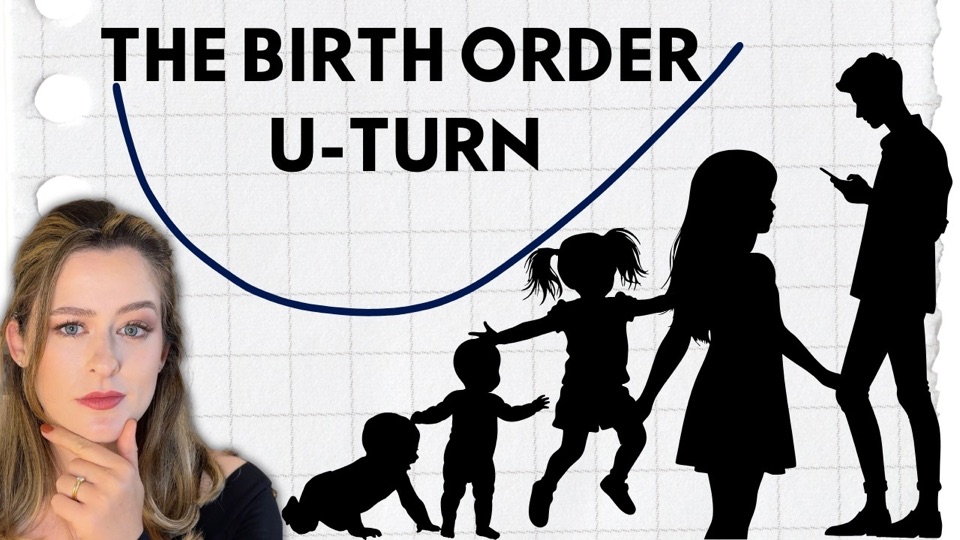
If you've had a newborn, someone has probably shown you the "cry curve": the famous graph where crying climbs to a peak at around six weeks and falls away by three months. It comes from a 1962 study of just 80 babies in Massachusetts, followed only to 12 weeks. Think of it as a weather forecast built from a single summer in one town. Useful, but you wouldn't bet your holiday on it.
The new review paints a fuller picture, and it matters wherever you live:
- At the peak, around five to six weeks, parents reported roughly two hours a day of crying and fussing. The pooled figure was 126 minutes, with huge variation between babies.
- One of the team's models suggests crying stays high until about eight weeks before it settles, while another puts the peak a little earlier, at around four weeks.
- It doesn't vanish after that. It levels off at around 40 to 45 minutes a day for the rest of the first year.
So babies cry a lot, and for longer than the classic graph suggests. If you'd like more on the feeding side of this, I've written about whether breastfeeding prevents colic.
So do Danish babies cry less?
On paper, yes. At one to two weeks old, Western countries ranged from about 76 minutes a day in Denmark to 148 minutes in Italy. At the six-week peak, the UK, the US and Canada all clustered around 120 minutes, and Denmark sat below that.
But here's the twist. The authors themselves wrote that they "would like to caution" about how much confidence to place in the Danish figure. The whole Danish estimate came from just two studies. Both were small, they covered different ages, and they were published around 15 years before the review. The UK, by contrast, contributed 14 studies.
Why the numbers might not mean what they seem
Nobody timed these babies with a stopwatch. Almost all the figures come from parent diaries, and in every study that said who filled them in, it was the mother. Not one study had dads reporting. When the main diary was checked against audio recordings, the match for crying and fussing combined was only moderate (a correlation of 0.45), and for fussing alone it was essentially zero.
What we're really comparing, then, is how much crying parents notice and write down. A relaxed Danish mum and a frazzled British mum might record the same evening very differently. The authors also point out that the Danish and wider Nordic habit of putting babies outside to sleep may affect how much crying parents notice and record.
And "Denmark" might not be the reason at all. Those two small Danish samples may just have included calmer babies or calmer families, and the policies people tend to credit, such as long leave and subsidised childcare, are common across the Nordic countries. Most studies came from the US, UK and Canada, and where ethnicity was reported, most samples were mainly white, so the global picture is still patchy.
In fairness, this is a strong paper. It's large, preregistered, its analysis materials are openly available, and it's self-critical, which is notable given the senior author works in Denmark. It also questions an older finding: an earlier 2017 review had linked breastfeeding with more crying, but this larger synthesis found no consistent difference by feeding type, though the authors note there wasn't much data to compare.
What really is different about having a baby in Denmark?
The policy gap between the two countries is real. Since August 2022, Danish dads get 11 weeks of leave that is theirs alone. It's use it or lose it, so it can't be handed over to mum. UK dads get two weeks by law. The pay gap is just as big: according to the OECD, Danish paternity pay replaces about half of average earnings, while UK statutory paternity pay replaces about 19%.
It changed behaviour, too. Economists studying the Danish reform found dads took about 3.7 more weeks of leave on average, and fathers' share of family leave rose from about 12% to 21%. That's a working paper, so it hasn't been peer-reviewed yet. The part that rarely makes the glossy features is that the same research found most Danish parents still believe mothers are better at early childcare than fathers, and Parsons' own work suggests mums still report getting up more at night, even while dads are on leave. Policy moved the dial. It didn't make care equal.
Outdoor napping is the other big difference, and it rests partly on trust. In a representative survey, about 74% of Danes said most people can be trusted, compared with about 43% of Brits.
For what it's worth, when I asked my husband Luke about his leave, he took two weeks and then roughly another four with our first, and just the two with our second. The night feeds second time round were mine, while he took on the toddler, who is now firmly his co-sleeping buddy.
What this means for your family
First, reset your idea of normal. Two hours a day of crying and fussing at six weeks is typical, and around 40 minutes a day later in the first year is still normal. If your baby cries and you're doing everything you can, that isn't a sign you're failing, and it isn't because you don't live in Copenhagen. Sometimes a baby is just being a baby.
Second, if you're in the UK and your partner can take more than the statutory two weeks, even unpaid or using holiday, the Danish evidence suggests it changes how care gets shared. Shared Parental Leave is worth looking into. Just be realistic that extra leave won't automatically split the night feeds. That's a conversation to have out loud, ideally before the baby arrives.
Third, if the crying is getting to you, tell your health visitor or GP. That isn't because something is necessarily wrong. Exhaustion and low mood are real, and you deserve support with them. And if your baby's crying changes, sounds different, or they seem unwell, trust your instincts and get them checked.
The one-sentence version for your partner: Danish babies probably don't cry less, but Danish dads definitely get more time at home, and that's the part worth copying.
Questions parents ask
When does newborn crying peak?
In a 2022 review of 57 studies, parents reported about 126 minutes a day of crying and fussing at five to six weeks, the traditional peak. The researchers' models put the high point somewhere between about four and eight weeks, after which crying settles, levelling off at about 40 to 45 minutes a day for the rest of the first year. Individual babies vary a lot around those averages.
Does breastfeeding make babies cry more?
An earlier 2017 review had linked breastfeeding with more crying, but the larger 2022 review by Vermillet and colleagues found no consistent difference in crying by feeding type. As with all of these figures, crying was reported by parents rather than recorded, so it reflects how much crying parents noticed and wrote down.
How much paternity leave do dads get in Denmark compared with the UK?
Since August 2022, fathers in Denmark have 11 weeks of earmarked leave that can't be transferred to the mother. UK fathers get two weeks of statutory paternity leave. According to the OECD, Danish paternity pay replaces about half of average earnings, compared with about 19% for UK statutory paternity pay. UK parents can also look at Shared Parental Leave.
Is it normal for my baby to cry for hours every day?
Around two hours a day of crying and fussing at about six weeks is typical, according to the largest review of infant crying, and plenty of healthy babies cry more. If the crying is wearing you down, or it changes, sounds different or comes with signs your baby is unwell, speak to your health visitor or GP. Asking for support is the right call, not a failure.
References
- Vermillet, A.-Q., Tølbøll, K., Litsis Mizan, S., Skewes, J. C., & Parsons, C. E. (2022). Crying in the first 12 months of life: A systematic review and meta-analysis of cross-country parent-reported data and modeling of the “cry curve”. Child Development, 93(4), 1201–1222. doi.org/10.1111/cdev.13760
- Parsons, C. (2026, September 22). Having a baby in Denmark v the UK: How different is it? The Conversation. theconversation.com
- Kleven, H., Landais, C., Lassen, A. S. S., Rosenbaum, P., Steingrimsdottir, H., & Søgaard, J. E. (2026). Expanding paternity leave: Effects on beliefs, norms, and gender gaps (NBER Working Paper No. 34862). National Bureau of Economic Research. nber.org/papers/w34862
- OECD. (2026). PF2.1 Parental leave systems. OECD Family Database. oecd.org
- Our World in Data. Trust. ourworldindata.org/trust