Why I'm home educating my children, as a former primary teacher
My personal reasons for home educating my two: what I saw teaching primary in Scotland, attachment in the early years, the privilege question, and why the research isn't what decided it for me.

Watch the video: Why I'm Home Educating My Kids (as a former primary teacher) · Subscribe to Mum Science
People ask me this a lot, usually with a slightly raised eyebrow: you were a primary teacher, so why on earth would you home educate? It's a fair question. This post is personal rather than a study breakdown, so I want to be upfront that most of what follows is my experience and my opinion, not evidence. Where I lean on research, I'll tell you what it can and can't show.
I have two children, my eldest isn't quite three, and I'm planning to home educate them both. Here's why.
What I saw as a primary teacher
I taught primary in Scotland before I had children, and what I saw inside the schools I worked in is a big part of this. I'm not going to pretend my experience represents every school, because it probably doesn't, and since moving to England I've met lots of lovely teachers. But in most of the schools I worked in, I saw toxic senior leadership that worked its way down, enormous pressure on teachers, resourcing problems, and children who weren't stretched when they could have been, or supported when they needed it.
What stayed with me most was the way some children were spoken about by adults, and how often children who needed help didn't get it. In my experience, safeguarding concerns weren't always met. I taught children who were sitting at around 20% attendance, and nobody senior seemed to treat it as a red flag. I went into teaching because I love children and want the best for them, and it broke my heart. I left in a way that knocked my mental health for years, and it's really only this year that I've felt confident in myself again.
Attachment and the first three years
The second reason is attachment. When I was pregnant I read Erica Komisar's Being There (2017), which argues for prioritising being with your children in their first three years where you can, and it stuck with me. I want to be careful here, though. That's one author's argument, not a settled finding, and the research is more nuanced than 'children must be with their mothers'. A toddler attachment study I covered recently made the point that attachment is built through ordinary, repeated, everyday moments of back-and-forth, and those happen whether or not a child also goes to nursery. The research on whether nursery affects attachment is genuinely reassuring for families who use childcare.
So for us this is less about what research demands and more about what I want: to fill my children's early years with us, with each other and with family as much as possible. I don't like the idea of handing them over at eight or nine in the morning and not seeing them until three or five, with a tired hour left at the end of the day. If your children are at nursery or school, that is not a criticism. Most families need two incomes, and loving, responsive parenting happens in the hours you do have.
Isn't home education only for privileged families?
I hear this one a lot, and I understand why. But it wasn't privilege that got us here. When my first was born I didn't go back to teaching, because I didn't want to send him to nursery, and for years we genuinely couldn't afford it. My husband had a good tech job and was going for promotions, and it still wasn't enough to get us out of a tight spot. So he started a YouTube channel, and after three years of hard work things have only very recently started to look hopeful. Until about a month before I filmed my video on this, we weren't in a position to do it either, and I still don't know for certain that we'll be able to keep it up.
If you want this but can't see how, my honest advice is not to write yourself off. Look at your skills and what you could offer people. It isn't possible for every family, and I'm not pretending it is, but it's sometimes more possible than it first looks.
What does the home education research actually show?
You might assume I'm doing this because the research says home-educated children do better. I'm not, and I'd be wary of anyone who tells you the research proves that. I've gone through it properly in my look at what the home education studies show, and here's my honest summary:
- A lot of it is funded or run by pro-home-education advocacy groups.
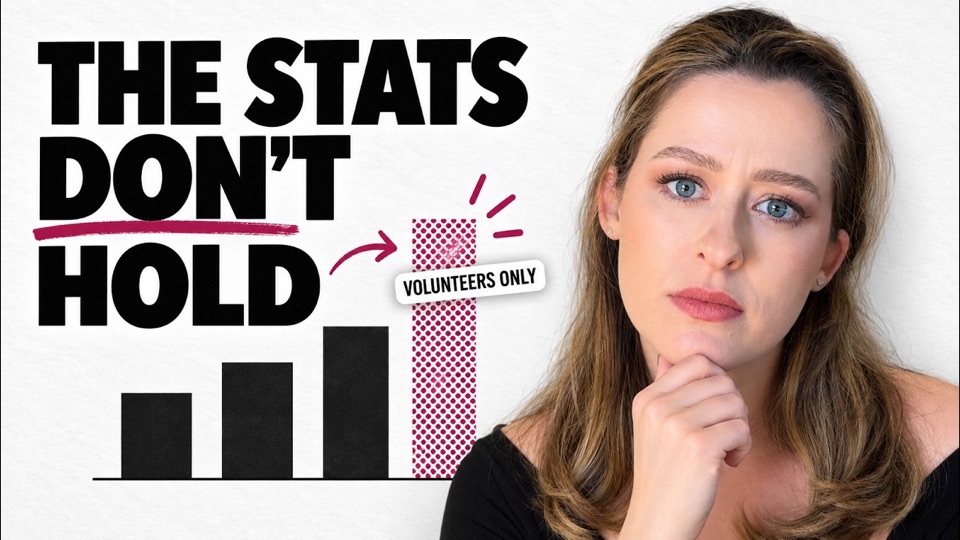
- The families who volunteer for studies tend to be the ones with the time, resources and enthusiasm to come forward. Families like mine, in other words.
- The famous headline that home-educated children score around the 80th percentile sits on top of all of those confounders.
The most thorough review of the field found that once you allow for family background, the achievement gap largely disappears. Outcomes seem to come down mostly to parenting, the home environment and resources, rather than whether a child is at home or at school. So the research doesn't sway it for me either way. Wanting to be with my children does.
My other reasons
Holidays and days out
Once children are at school, taking them out for a holiday or a day out can land you with a fine, or worse. I understand why attendance matters, believe me. But I want to be able to take mine to the zoo or the woods on a Tuesday because it's a brilliant way to learn, and the current system feels all or nothing.
Values
I used to go into schools on behalf of a charity to teach relationships and sex education, and I was very much in favour of all of it. Since having children my views have become more central, and I want to decide for myself what's appropriate for mine, and when. It isn't a religious or political crusade. It's mostly about having a say while they're small.
Socialisation
The question every home educator gets. My children go to all sorts of clubs and groups, and they're very confident. From what I've read, there isn't much behind the idea that home-educated children are poorly socialised, though most of those studies rely on parents and children reporting on themselves. Near me there are home ed groups, tutoring options and even council-funded groups, many of them free, and I know other mums planning to home educate who come from science backgrounds.
Confidence
I had low self-esteem for a long time, and a constant feeling that I was about to get into trouble. I don't want that for my children. I want them secure in themselves and confident they can do whatever they set their minds to, and in my opinion the school system isn't built for that. Watching my husband and me step away from the salaried route and make self-employment work has shown me that ordinary people can do this sort of thing, and I want my children to grow up believing it too.
As a history graduate, I also think we're living through an unusual moment. For most of history, children grew up in small, close-knit communities, learning alongside family and people who knew them well. Now it's a large, fairly anonymous system where results matter enormously. Results are important, but the individual child can get lost. That's my view rather than a finding, and it's what sits underneath all of this: when my children cry, I want to be the one who's there.
What this means for your family
For the record, I haven't got a curriculum, I haven't even got a printer yet, and my eldest isn't three. So there's no panic. We're doing play-based learning and enjoying being together, and I'm looking forward to making resources when the time comes.
I'm not telling you to home educate. This is my story, and most families aren't in a position to do it. Until very recently, neither were we. If your children are at school or nursery, there's still so much you can do: a bit of one-to-one time each week where your child has your full attention, regular woodland walks, bringing your own angle to what they're learning. The quality of the time you spend together matters most, wherever they spend their days.
Questions parents ask
Is home education only for wealthy families?
Not necessarily, though money is a real barrier and it isn't possible for every family. In my case we couldn't afford for me to stay at home for years and made it work only after a lot of change, very recently. If you want to home educate but can't see how, it's worth looking at your skills and options before ruling it out, while being honest about the financial pressure it can bring.
Do home-educated children do better at school subjects?
The research doesn't show that clearly. The best-known figures, with home-educated children around the 80th percentile, come from volunteer families and studies often linked to advocacy groups. The most thorough review of the field found that once family background is taken into account, the achievement gap largely disappears. Parenting, the home environment and resources seem to matter more than where the learning happens.
Are home-educated children poorly socialised?
There isn't much evidence for that stereotype. A major review of nearly 100 studies found home-educated children mostly did not seem to fall behind on social skills, although most of those studies relied on parents and children reporting on themselves. In practice, many home-educating families use clubs, groups, sports and local home education meet-ups, some of which are free or council-funded.
Can you still make a difference if your children go to school?
Absolutely. You don't need to home educate to shape your child's learning and confidence. Regular one-to-one time where your child has your full attention, trips out at weekends, woodland walks and bringing your own interests into what they're learning all count. The quality of the time you spend together matters more than the setting they spend their days in.
References
- Komisar, E. (2017). Being there: Why prioritizing motherhood in the first three years matters.
- Kunzman, R., & Gaither, M. (2020). Homeschooling: An updated comprehensive survey of the research. Other Education: The Journal of Educational Alternatives, 9(1), 253–336. icher.org (PDF)