19 weeks pregnant: what nobody tells you
Almost halfway. A lot is happening developmentally this week — most of it invisible to you, and most of it kind of extraordinary.

Watch the video: 19 Weeks Pregnant: What No One Tells You · Subscribe to Mum Science
Nineteen weeks is one of those quiet-looking weeks that is actually doing an enormous amount. The baby is now around 15cm crown-to-rump, roughly 240g, and things are happening at a cellular level that will shape the rest of their life.
Myelination begins
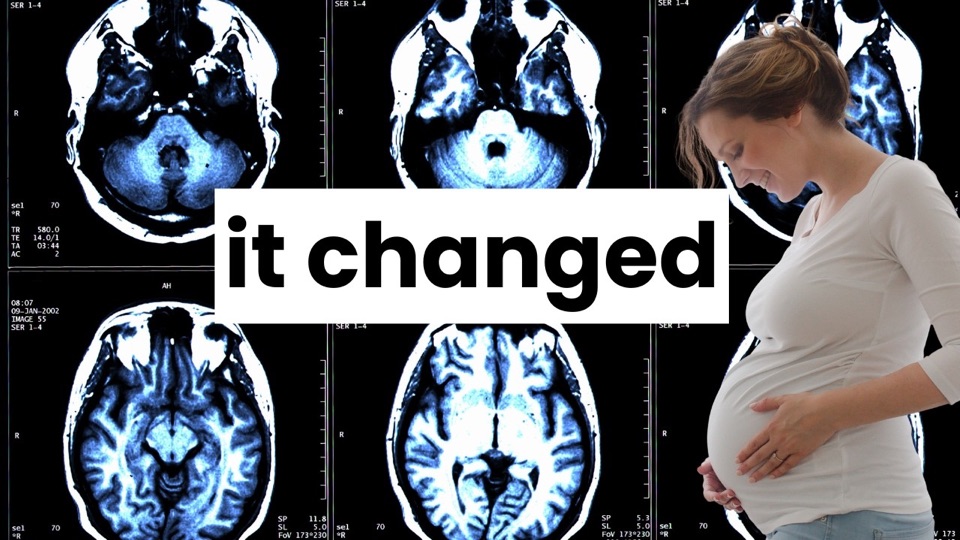
Around this point in gestation, myelination — the process of insulating neurons with a fatty sheath that lets them transmit signals faster — starts in earnest, particularly in the spinal cord and brainstem. This is a foundational process that will continue for years after birth; what begins now keeps going through childhood and into early adulthood, and brain scans of young children show it moving especially fast in the first five years (Dean et al., 2014).
Vernix caseosa forms
That waxy white coating that you'll meet at birth starts developing around now. It's not just protective: it's thought to help defend against infection, and it keeps newborn skin better hydrated, although in one study leaving it on made no difference to babies' temperatures. In a study of newborns, skin where the vernix was left on was better hydrated, with a lower pH and less redness, which supports leaving it on at birth (Visscher et al., 2005).
You may feel movement — or not
Quickening — that first perceptible flutter — happens somewhere between 16 and 24 weeks (if you haven't felt anything by 24 weeks, the NHS advises telling your midwife), with significant variation based on placenta position, parity, and individual anatomy. An anterior placenta tends to mute early movements considerably. You are not behind if you can't feel anything yet.
Round ligament pain is real
If you've had sharp twinges in your lower abdomen, that's likely the round ligaments stretching as your uterus grows. NHS guidance confirms this is normal and typically improves with position changes and gentle movement. Pain that is persistent, severe, or accompanied by bleeding warrants a call to your midwife.
References
- Dean, D.C., O'Muircheartaigh, J., Dirks, H., Waskiewicz, N., Lehman, K., Walker, L., et al. (2014). Modeling healthy male white matter and myelin development. NeuroImage, 84, 742–752. doi.org/10.1016/j.neuroimage.2013.09.058
- Visscher, M.O., Narendran, V., Pickens, W.L., LaRuffa, A.A., Meinzen-Derr, J., Allen, K., & Hoath, S.B. (2005). Vernix caseosa in neonatal adaptation. Journal of Perinatology, 25(7), 440–446. doi.org/10.1038/sj.jp.7211305
- NHS (2023). You and your baby at 19 weeks pregnant. nhs.uk.
- Moore, K.L., Persaud, T.V.N., & Torchia, M.G. (2020). The Developing Human: Clinically Oriented Embryology (11th ed.). Elsevier.